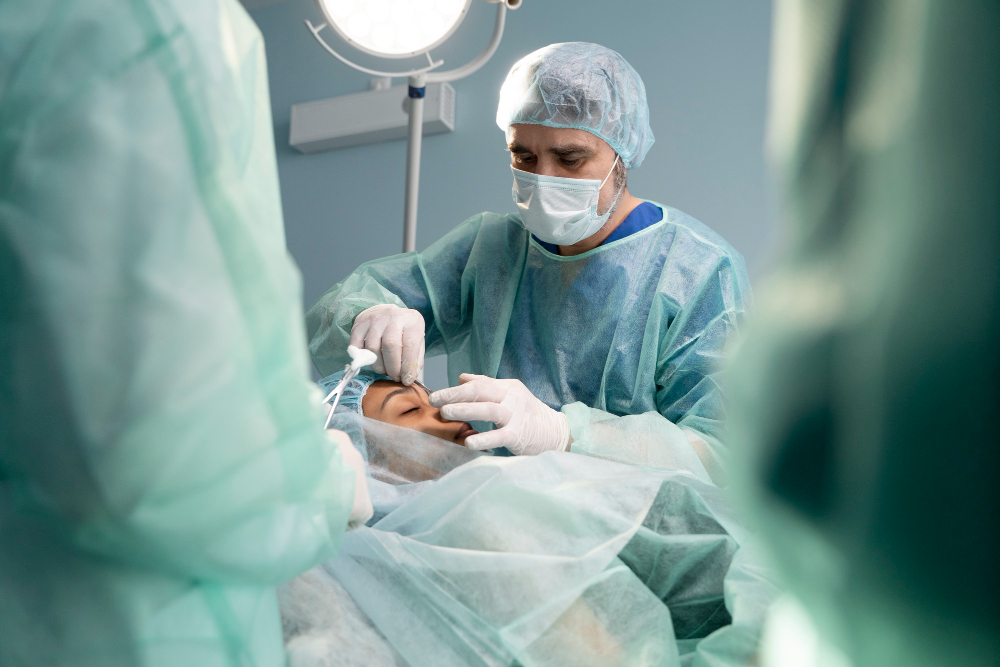
Cataract Surgery
Cataract is one of the most common eye problems, especially as people grow older. It usually does not happen suddenly. It starts slowly. Vision becomes a little blurry, lights feel too bright, reading gets harder, and night driving starts feeling uncomfortable. Many people ignore these early signs because they think it is just age. But cataract is treatable, and delaying it only makes daily life more difficult.
At Sadhuram Eye Hospital, cataract care is handled with experience, proper guidance, and simple patient focused care. From the first eye check-up to surgery and recovery, the aim is always the same, helping patients see clearly again without fear or confusion.
What is Cataract
Our eyes have a natural lens that helps us see clearly.
When this lens starts losing its clarity and becomes cloudy, it is called cataract. Because of this, vision does not stay sharp like before.
Things may start looking dull or blurred. Reading may take more effort. Bright lights may feel uncomfortable, and night vision may not be as clear.
Cataract is mostly common as we grow older, but it can also happen due to diabetes, injury, long term medicines, or other eye conditions.
Common Symptoms of Cataract
Some signs are easy to miss in the beginning, but over time they become more noticeable.
- Blurred or cloudy vision
- Difficulty seeing clearly at night
- Bright lights causing glare
- Halos around lights
- Colours looking faded or yellowish
- Double vision in one eye
- Frequent changes in glasses number
- Difficulty reading small letters
When Should You See a Doctor
Many patients wait too long because cataract usually comes slowly and without pain. But when your normal daily work starts getting affected, it is time to get your eyes checked.
You should meet an eye specialist if:
- Reading becomes difficult even with glasses
- Driving at night feels unsafe
- Lights feel too sharp or uncomfortable
- Vision feels dull or cloudy
- Glasses prescription keeps changing often
- Faces are becoming difficult to recognise clearly
Early diagnosis makes treatment easier and helps avoid unnecessary delay.
Risk Factors of Cataract
Cataract is common with age, but age alone is not the only reason. Some people may develop it earlier because of other health or lifestyle reasons too.
Some common risk factors are:
- Ageing
- Previous eye injury
- Too much sunlight exposure
- Smoking and alcohol
- Diabetes
- Long term use of steroid medicines
- Radiation exposure
- Family history
Regular eye checkups help in finding cataract early and treating it at the right time.
Treatment of Cataract
In the beginning, stronger glasses or better lighting may help for some time. But cataract does not go away with medicines. Once vision starts affecting daily life, surgery becomes the right treatment.
During the surgery, the cloudy natural lens is removed. It is replaced with a clear artificial lens.It is a safe and commonly done procedure. Surgery is usually advised when reading, driving, or normal daily work starts becoming difficult.
Types of Cataract Surgery
Different patients may need different types of cataract surgery depending on their eye condition.
- SICS – A commonly done cataract surgery with good recovery and reliable results
- Phacoemulsification – A modern method with a smaller incision and faster healing
- MICS – Micro incision surgery with more precision and less disturbance to the eye
- Toric IOLs – Used when cataract is combined with astigmatism
- Multifocal Lens – Helps improve both near and distance vision
- Traumatic and Complicated Cataract Surgery – For cataracts caused by injury or other complex eye problems
- Paediatric Cataract Surgery – Cataract treatment planned specially for children
- Secondary IOL – Lens placement for special cases where extra support is needed
What to Expect During Surgery
Many patients feel nervous when they hear the word surgery, but cataract surgery is usually simple and smooth. It is mostly a day care procedure, so patients can go home the same day. It is safe, commonly done, and usually painless. During surgery
- Local anaesthesia is given for comfort
- The procedure usually takes only a short time
- The cloudy lens is removed carefully
- A clear artificial lens is placed inside the eye
- Short observation is done before discharge
Most patients say the fear before surgery was much bigger than the actual experience.
Recovery After Cataract Surgery
Recovery is usually quick, but proper care matters a lot. Following simple instructions helps improve healing and gives better visual results. Patients are advised to
- Use eye drops exactly as prescribed
- Avoid rubbing the eyes
- Keep dust and water away from the eyes
- Come for follow up visits on time
- Avoid heavy lifting for a short period
- Follow the doctor’s advice carefully
Mild irritation or slight discomfort for a few days can be normal. Vision usually improves gradually over the next few days and weeks.
Why Choose Us
- Experienced cataract specialists and skilled surgeons
- Advanced diagnostic and surgical technology
- Personalized treatment based on each patient’s condition
- Safe, reliable, and patient focused surgical care
- Careful guidance before, during, and after surgery
- Affordable treatment with charitable support for deserving patients
- Equal care and attention for every patient
- Trusted legacy of eye care built over decades
Cataract may grow slowly, but once it starts affecting life, waiting too long only makes things harder. Good vision brings confidence, independence, and comfort in everyday life. With timely diagnosis and the right surgery, seeing clearly again is absolutely possible.