
PEDIATRIC & STRABISMUS SERVICES
What are the important childhood eye heath problems?
Children are very precious to their parents and to society. Their good all round development and good education is very important for their well-being.Good eye sight is very essential for every child to lead a full and normal healthy life. Childhood blindness is due to many treatable and preventable eye conditions. The content of this pamphlet is for simple and easy understanding of these conditions and will help parents and caregivers to be attentive to their children’s visual needs.
Few important and common eye diseases we can identify are:
1. Childhood refractive errors
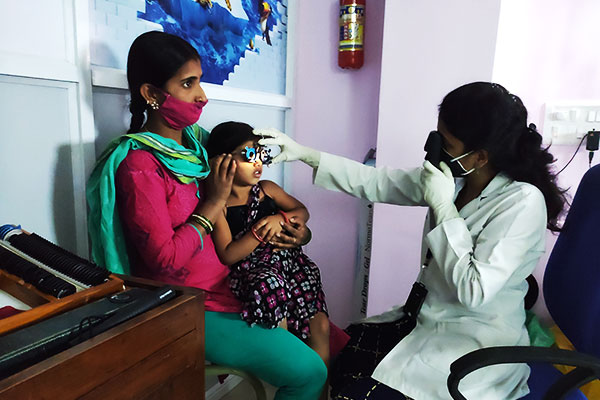
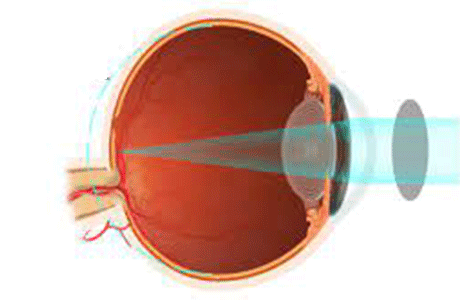 How to identify: While viewing blackboard or school screen, television screen, mobiles, tablets the child maybe- squeezing their eyes, go close to the objects to see them, frequently rub their eyes, have watering of eyes, squint eyes(crossing of eyes), complain of headache. This is clue to the parents that the child may be needing spectacles or glasses for better vision. The common refractive errors are myopia (short sightedness), hyperopia (far sightedness), astigmatism (cylinder power). Why should we treat this condition: Child will see much better of eye strain will disappear and importantly we will protect the child from developing lazy eye- also called AMBLYOPIA. We are now going to see more children with epidemic of myopia because of modern lifestyle and gadgets, parents should be very much aware of the “screen time” issue. All children should undergo screening for refractive errors before school enrollment.
2. Squint / Strabismus
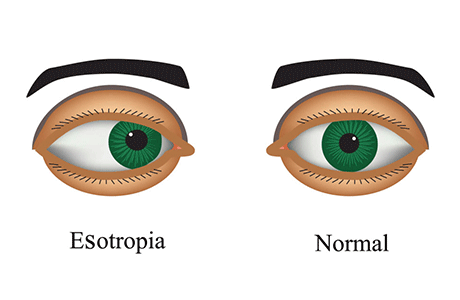 This is commonly known as crossing of eyes or “child appears cross eyed”. The black portion of the eye can move inwards (esotropia) or outwards (exotropia) sometimes upwards or downwards. Many of these children may be having this problem since birth or early childhood sometimes it can happen suddenly within days also. Any child with cross eye should and must be seen by children’s eye specialist.
This problem can be treated with glasses or by performing squint surgery. It is not a “good luck sign” as considered in olden days. If treated early it can help in good quality vision and 3-D vision in the child. Some cross eyes are important signs of childhood cataract, retinoblastoma (eye cancer), neurological conditions also.
3. Allergic eye disease
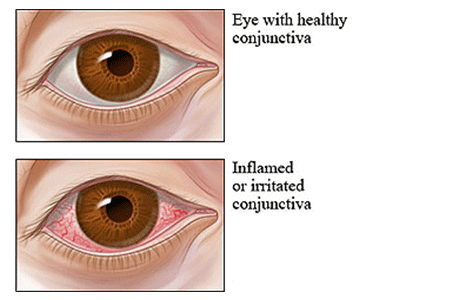 Children will be having redness, itching, frequent rubbing and watering of eyes. This is not infection of the eyes but allergy of the eyes, just like skin allergy or asthma. These children have Very sensitive eyes to dust or pollens or weather changes especially summer heat. If it is not treated early, child will continue to rub the eyes and the conditions become worse and can induce changes in the black part of the eye. Medications which can be directly applied into the eye are available to control this problem along with environmental modification.
4. Childhood cataract
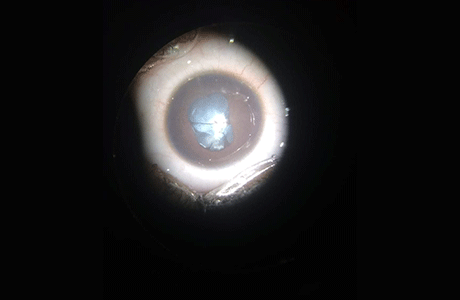 Even children can develop cataract which can be noticed as whitish opacity in the pupil area since birth- we call this as “whitish reflex” in the eye, it can even develop later in childhood also. Such children have difficulty in vision, cross eyes or shaking of eyes (we call this as nystagmus). Infants are not able to fixate on any object infront of them because no light goes into the eye- the cataract acts like a curtain. We need to operate these children as early as possible to restore good vision in them.
5. Congenital lacrimal duct obstruction
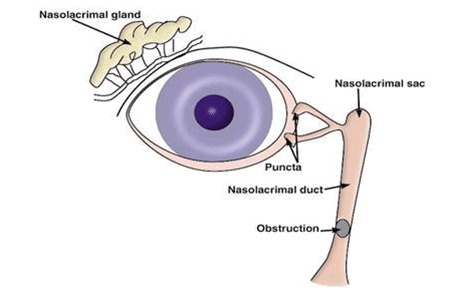 Infants or small children have watering and discharge from the eye without eye being red. This condition is continuous and not like watering because of infection or allergy. This is due to block in the tear flow from the eye to the nose, just like a drainage pipe block. These babies should visit their children’s eye specialist in early age to treat this problem. Good and effective minor surgeries are there in children age 1-2 years and some effective specialized plastic surgery procedures are available at later age (>5 years) to treat this problem.
6. Rop-retinopathy of prematurity screening
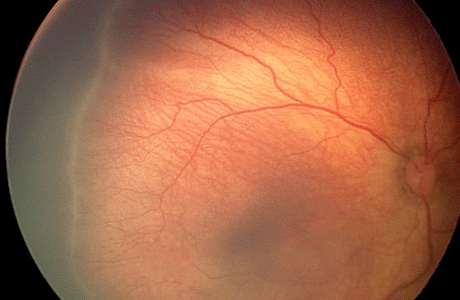 Babies who are born preterm (below 32 weeks), or born with low birth weight, or have prolonged admission in ICU, or have infections immediately after delivery can have problems in the eye due to failure of complete maturation of normal blood circulation. All such babies should be seen by the eye specialist to screen for retinopathy of prematurity within 30 days of life. Parents should specifically ask their obstetrician to send them to the eye doctor who is trained in this screening procedure. Please remember these babies are not born blind but delay in screening can cause blindness.
Note
We have described only few important conditions here. Children can also present with the following and need to be evaluated by their doctor.- Whitish opacity on the black part of eye (cornea opacity).
- Small eye (microphthalmos), hole in the iris (coloboma).
- Large eye at birth (more eye pressure at birth- childhood glaucoma).
- Drooping of the eye lid, called ptosis- since birth.
- Intolerance to light or night blindness – due to retinal dystrophy.
- Delayed development and Cerebral visual impairment.
- Genetic diseases with eye involvement.
- Excess or lack of eye muscle action- accommodation and convergence issues..
Get In Touch
Contact Us
Mail Us